 By fengcainiao
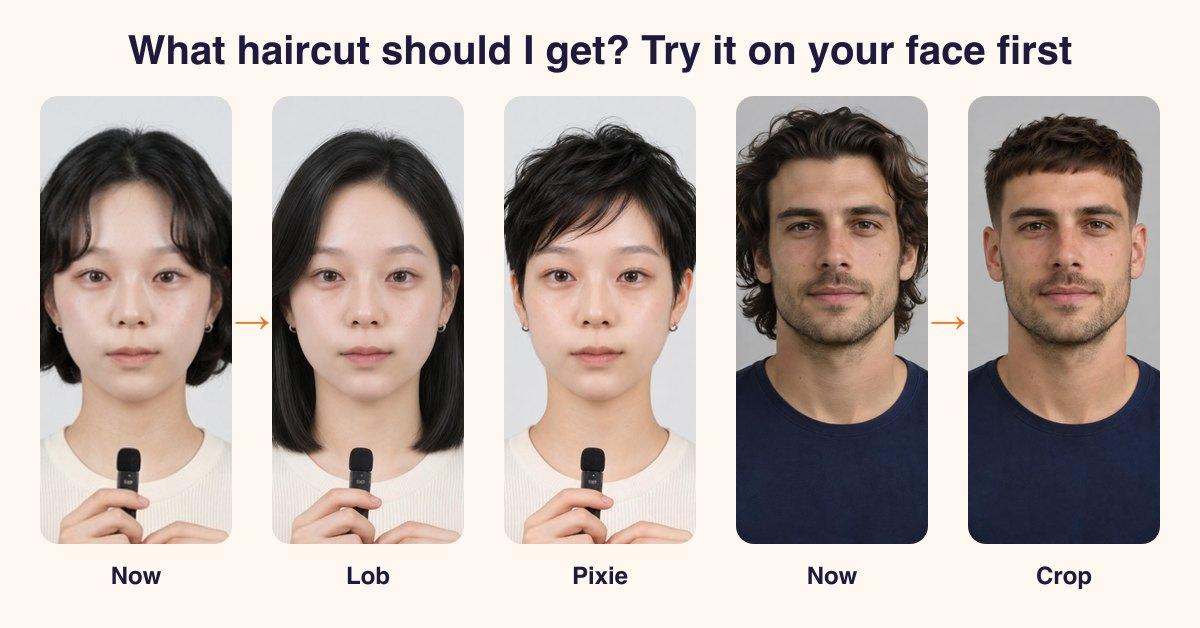
What haircut should I get? Narrow it down in three steps: find your face shape, check what your hair does when you leave it alone, and decide how much time you will spend on it each morning. That leaves two or three candidates. Then look at each one on a photo of your own face before anyone picks up scissors. Koosu’s AI Hairstyle Changer does that last step from one selfie.
Face shape is where every guide starts, and it is a good start. It is not the decision. A salon in Tennessee says it plainly in its guide to talking to your stylist: plenty of great haircuts break the rules, because the stylist adjusted for texture, density, or how the client actually wears their hair. So use your face shape to make a short list, and let your hair and your routine cross names off it.
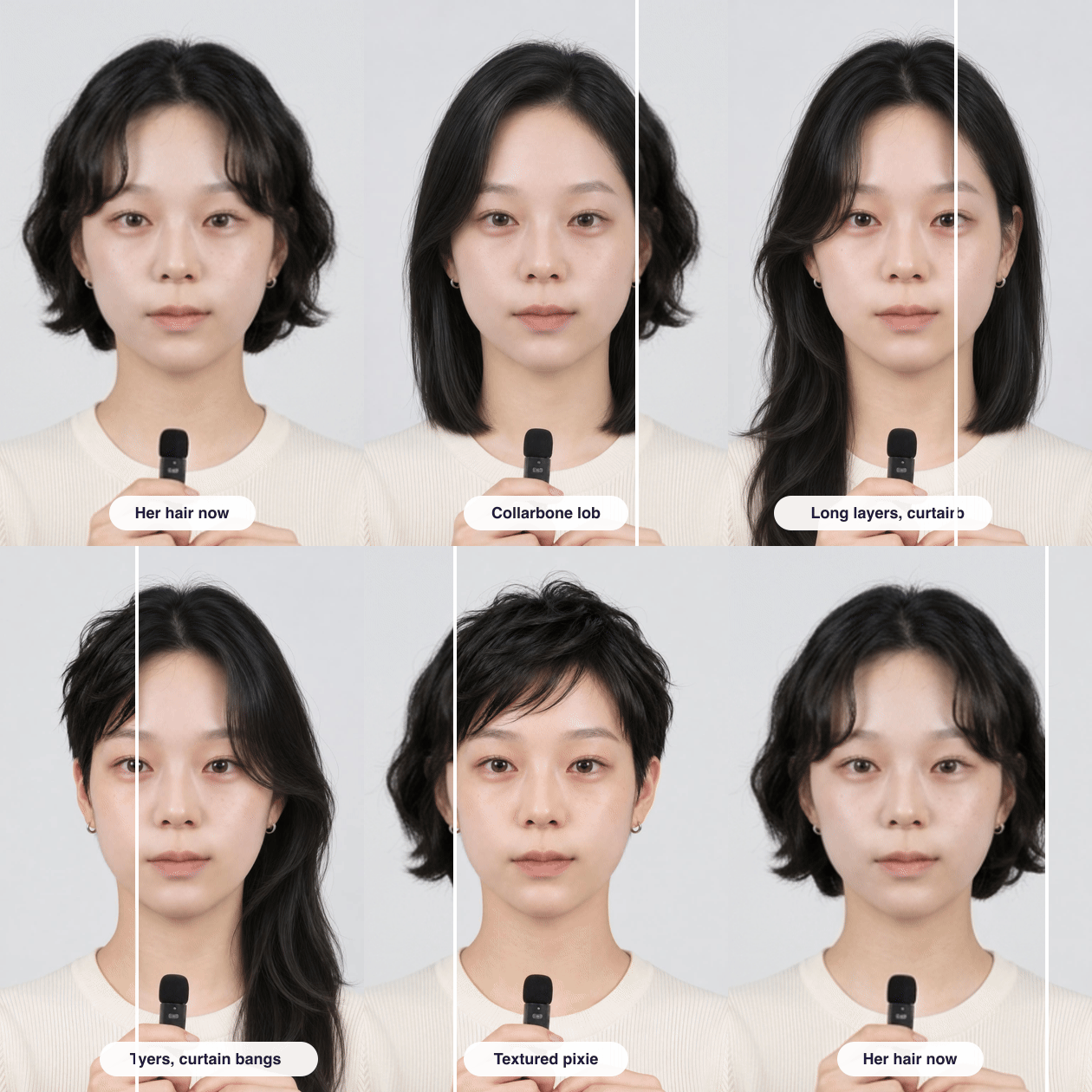
The animations in this guide were made with GPT Image 2.6 Sunburst, one of the image models on Koosu. They show what changes between cuts; they are not output of the hairstyle tool, and they do not say which cut suits anyone.
How to know your face shape in two minutes
You need a mirror or your phone’s camera, and your hair pulled back off your face.
- Take a straight-on photo. A men’s barber guide from Clippers Barbershop suggests standing about 3 feet away with the camera at head height and the zoom at 1x. Luxy Hair’s version: trace your outline on the mirror with an eyeliner pencil.
- Find the widest part. Is it your forehead, your cheekbones or your jaw?
- Look at the jaw. Is it rounded, angled, or narrow and pointed?
- Compare length and width. Is your face clearly longer than it is wide, or about the same?
Many faces sit between two shapes. That is normal, and it is one more reason not to treat the shape as a rule. If you are stuck, ask at the salon: the same salon guide notes that a stylist can usually see your face shape in person more accurately than you can in a mirror.
Haircut for face shape: a cheat sheet
This table pulls together the advice of a hair-care brand (Davines), a hair-extension brand (Luxy Hair) and two barbershops (Clippers and Elegant G). Use it to pick candidates for your best hairstyle for your face shape, not to rule out a cut you love.
| Face shape | How to spot it | Often suggested (longer hair) | Often suggested (short hair) | Guides say think twice about |
|---|---|---|---|---|
| Oval | Longer than wide; forehead a bit wider than a curved chin | Almost anything: lobs, layers, curtain bangs | Crew cut, textured crop, side part | A lot of height at the crown |
| Round | About as wide as long; soft curves, no sharp angles | Long layers, a side-parted lob, side-swept bangs | Height on top: quiff, pompadour, side part | Full sides; very short tops; very short one-length cuts with no texture |
| Square | Forehead, cheekbones and jaw about the same width; angled jaw | Soft layers, waves, curtain or side-swept bangs | Textured crop, quiff, side part | Very thick blunt bangs; severe slicked-back styles |
| Heart | Forehead widest; narrow, pointed chin | Lob at or below the shoulder, curtain bangs, layers that graze the collarbone | Medium layers with texture, low fade with volume on top | Lots of volume at the crown; short blunt bangs |
| Long (oblong) | Clearly longer than wide | Waves, bangs, mid-length cuts with layers | Medium length, side part with texture | Hair past mid-back; extra height on top |
| Diamond | Cheekbones widest; narrow forehead and chin | Textured lob, long side-swept bangs, soft waves from the chin | Not covered by the barber guides we read | Heavy straight-across bangs |
Notice where the guides disagree. Davines lists side-swept bangs for a round face; Luxy Hair tells round faces to avoid soft, wispy bangs. Both are reasonable on paper. Only your face, your hair and a look at the result can settle it.
Why your hair matters as much as your face shape
Most answers to “what hairstyle suits my face” stop at the table above. The cut also has to work with the hair growing out of your head. As Davines puts it, a cut that looks amazing on straight hair may not work on curly hair, and the other way round. Check three things:
- Texture. Wash your hair and let it dry with no products and no tools. Take a photo. That is the hair your new cut will meet on a lazy day. If it dries into waves, a cut that needs a pin-straight blow-dry will fight you every morning.
- Density. Fine, low-density hair can look flat with heavy layers instead of full. Tell the stylist which you have.
- Growth pattern. A cowlick or a widow’s peak at the hairline decides where a fringe or a part can sit. Elegant G Barbershop’s checklist gives this its own point, and so should you.
Curly and coily hair also shrinks as it dries, so the length on the stylist’s comb is not the length you will see. Say so when you book.
How much time will you give it each morning?
This part of how to choose a haircut is easy to skip. A Moment’s Peace puts it plainly: a cut that needs 20 minutes of blow-drying every day will not look like the salon version three weeks later if that is not your routine. The salon sorts cuts into three levels:
- Low upkeep: blunt cuts that grow out cleanly, cuts that work air-dried, longer layers with little shaping.
- Medium: face-framing layers, curtain bangs, shoulder-length cuts with some shape.
- High: sharp bobs and short pixies that need regular trims to hold their line, and full bangs.
Be honest with yourself here. If you wash every other day and never touch a curling iron, the low-upkeep list is yours, whatever your face shape says.
Should I get bangs?
Bangs change how your face reads without giving up any length. The guides above suggest them most often for long faces (a fringe shortens the forehead) and, in softer curtain or side-swept versions, for heart and square faces. Before you decide:
- Check the hairline. A cowlick at the front decides how a fringe can lie; ask the stylist to look before cutting one.
- Count the trims. Curtain bangs sit in the medium-upkeep group above; full bangs in the high one, because they need frequent trims.
- Pick the type, not just yes or no. Wispy, curtain, side-swept and blunt bangs change a face in different ways, as the guides’ disagreement above shows.
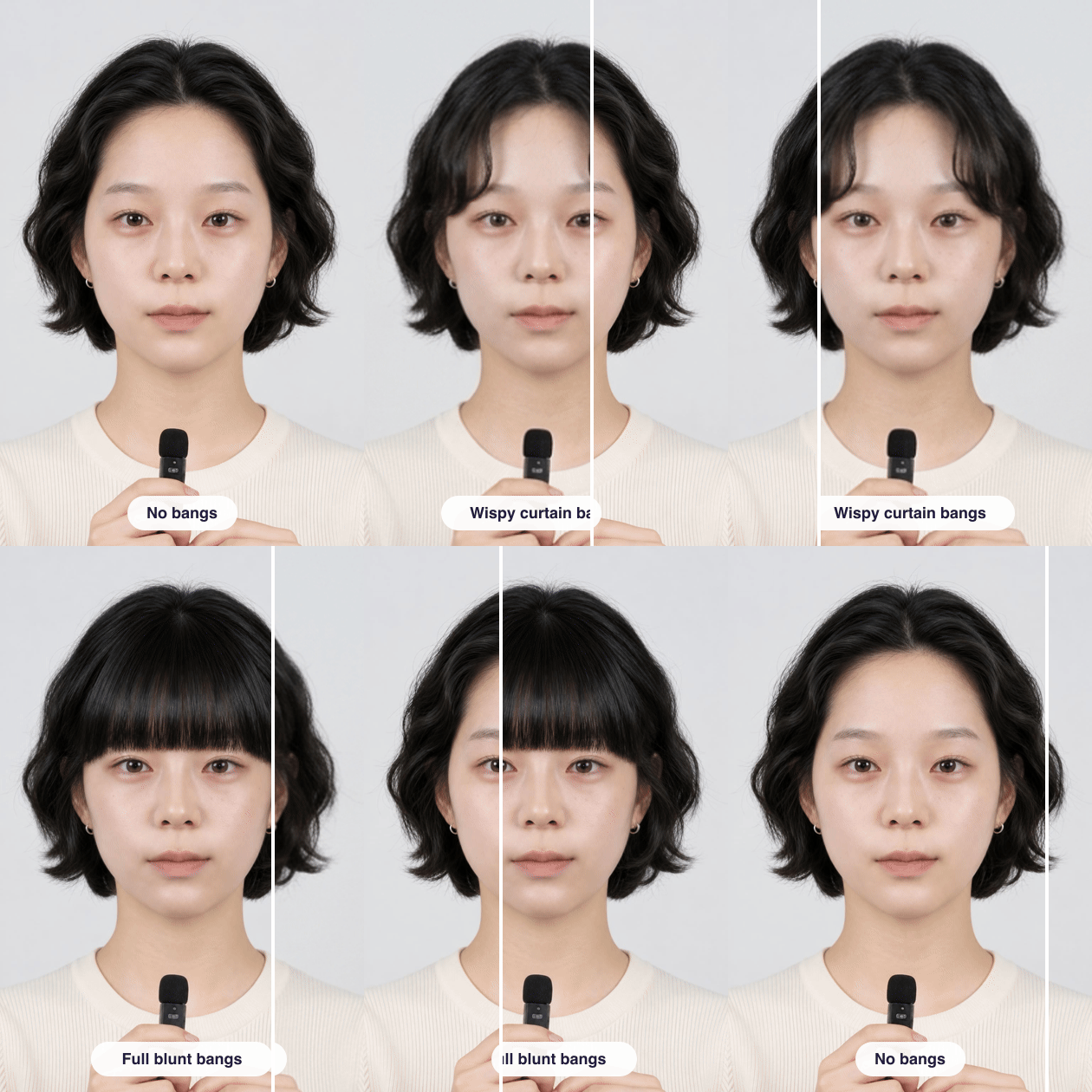
The fringe changes how much of the forehead and brows you see, so it is the easiest thing to judge in a photo. In the AI Hairstyle Changer, the Curtain Bangs preset does exactly that, or you can type the fringe you mean: “full blunt bangs just above the eyebrows”.
What haircut would look good on me? Try it on your photo
Wanting to see a cut before getting it is not new. In a 2016 r/LifeProTips thread on this question, one commenter suggested taking a photo of yourself, then cutting out “the hair of various people with different hairstyles” from a magazine and moving each one over your head. An image editor does the same job without the glue.
- Take a front-facing photo. Even light, face and hairline visible, hair tied back if you are thinking of going shorter. No hat, no hood.
- Open Koosu’s AI Hairstyle Changer and upload it. Pick one of the 12 presets (pixie cut, sleek bob, long layers, curtain bangs, wolf cut, buzz cut and others), tap one of the 50 named haircuts from the AI face library, upload a photo of a cut you saved, or describe one in a sentence: “collarbone lob with a side part”, “textured crop with a low taper fade”.
- Make three or four versions. Save them and look at them side by side the next day, when the first one is no longer new.
- Take your favorite to the salon. It is a picture of the shape and length you want, on your face, which is more useful than a celebrity photo.
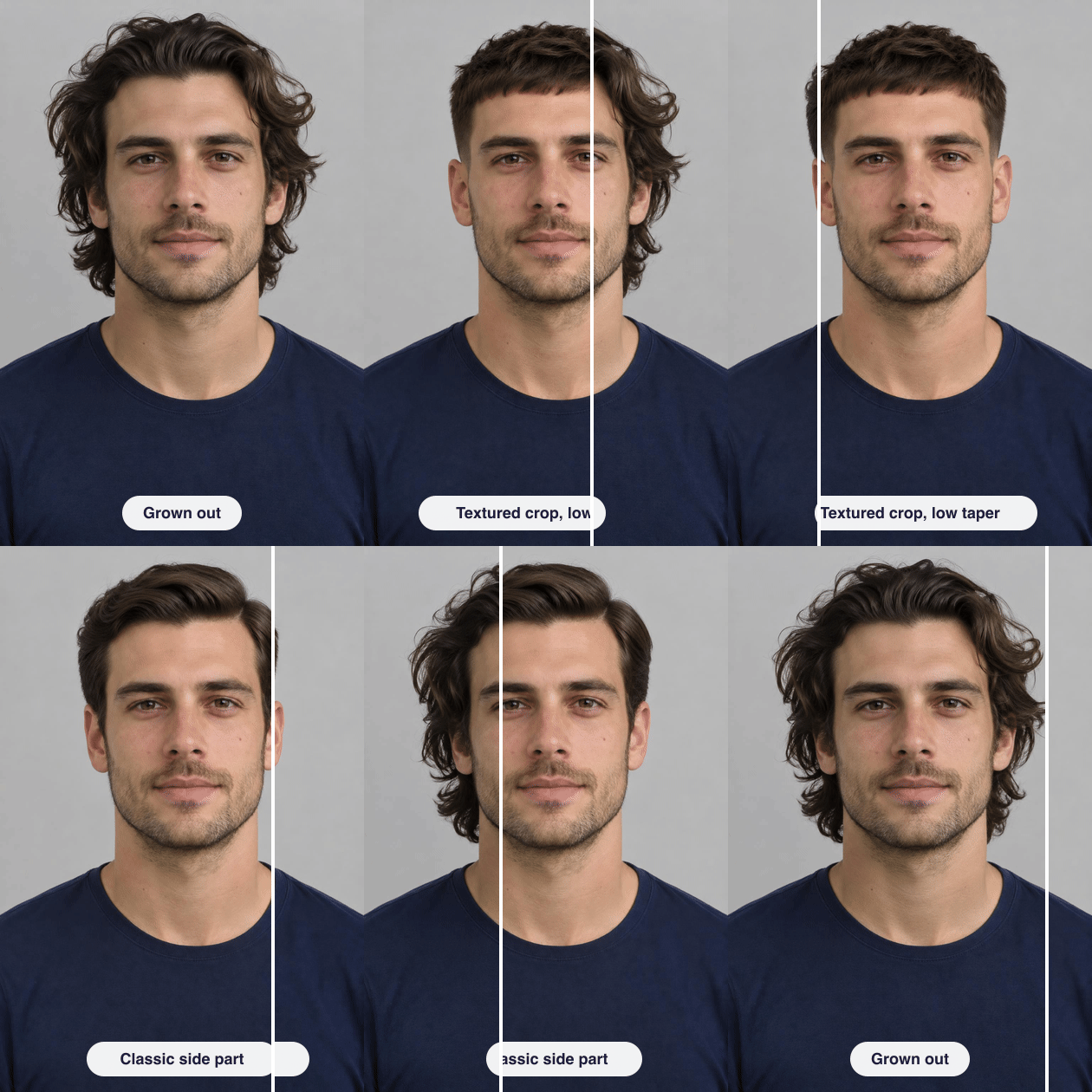
It works the same for men: describe the fade, the length on top and where the part goes. The tool is free to try: a visitor who is not signed in gets 2 free generations, and an account gets 2 a week when it has no credits. Downloading the result needs a free account. It is one of Koosu’s AI photo editing tools.
Know what the picture can’t tell you. It shows the shape and the length on your face. It does not show how your hair will behave after a night’s sleep, whether a cowlick will let the fringe lie flat, or whether your hair is thick enough to hold the cut. It is an AI drawing, so it can also get small things wrong. As Salon Povera’s guide says about any reference photo, a cut is never guaranteed to look the same on you as on the model. In short, it is a style check, not a promise; our guide to what an AI clothes changer is good for explains the same limit for outfits.
How to ask your stylist for it
The best reference photo is only half the conversation. A Moment’s Peace suggests four habits:
- Frame your photo as “I like the shape of this” or “I like how short this is”, not “make me look exactly like this”.
- Describe your real routine: how often you wash, whether you use a dryer, how long you will spend.
- Ask what the stylist would change about the photo for your face shape and hair type.
- Say what you don’t want just as clearly: “nothing above my shoulders”, “no bangs”.
Getting ready for a headshot? Our guide on what to wear for a headshot covers the rest of the photo, and the AI Makeup Planner suggests a makeup plan for the occasion from the same selfie.
FAQ
How do I know which hairstyle suits me?
Start with your face shape to get a short list, then remove the cuts that don’t fit your hair texture, density or the time you spend on your hair each day. The cuts left over are your candidates. A stylist can confirm your face shape in person and tell you what your hair can hold.
How do I check which haircut looks good on me?
Look at it on your own face before the appointment. Upload a front-facing selfie to an AI hairstyle editor, make a version of each candidate, and compare them side by side the next day. Bring the one you keep coming back to as a reference photo.
Can AI tell me what haircut suits me?
AI can show you a cut on your face, which is the useful part. Whether it suits you is still your call and your stylist’s: the picture does not know your hair’s texture, density or growth pattern. Use it to compare options, not as a verdict.
Can I upload my photo to try hairstyles?
Yes. In Koosu’s AI Hairstyle Changer you upload one selfie and pick a preset, a named haircut, a photo of a cut or a description. The tool page says the uploaded photo is used for that one edit and is not saved; only the result is stored so you can download it.
Do chubby faces look better with long or short hair?
Either can work. What matters more is where the volume and the ends sit. For round faces, the guides we read suggest length past the chin or height on top, and warn against full sides that add width at the cheeks. A short cut with volume at the crown, such as a textured pixie or a quiff, is on their lists too.
Pick two, then look
You don’t need a perfect answer to “what haircut should I get”. You need two or three good candidates and one honest look at each on your own face. Take the photo tonight, try them, and walk into the salon knowing what you want.